Key points
- An aged care assessment is generally required to access subsidised aged care in Australia, although some veterans and war widow(er)s may be eligible for some support without one. The assessment is free and looks at the person's needs, although some people are assessed as not eligible.
- The aged care assessment process starts by registering with My Aged Care on 1800 200 422 or online. The online application takes about 15 to 20 minutes. A family member, carer, GP or hospital social worker can start this on the person's behalf.
- The aged care assessment is usually in person at home, or in hospital, and covers daily tasks, mobility and falls, memory and mood, health conditions, the home environment and current supports.
- Target timeframes for completing an aged care assessment range from 10 to 40 days depending on urgency, with shorter targets for people in hospital.
- The aged care assessment outcome letter sets out what the person is approved for, but approval is not the same as a place. For Support at Home there is usually a wait in the national priority queue.
- A review can be requested if the aged care assessment outcome does not reflect the person's situation, and a reassessment can be requested if circumstances change significantly. The Older Persons Advocacy Network (OPAN) provides free advocates on 1800 700 600.
Step one: register with My Aged Care
Call 1800 200 422 or apply online. You will be asked about your current situation and the help you need, and you will need your Medicare card. My Aged Care says the online application takes about 15 to 20 minutes.
A family member, carer, GP or hospital social worker can start this for you. If someone else is helping you, you can register them as your registered supporter, for example on a call to My Aged Care together, so they can speak to My Aged Care for you in future.
Have these ready before you call
Medicare card number, a list of health conditions and current medications, your GP's name and practice, and notes on what is hardest day to day.
Step two: the assessment
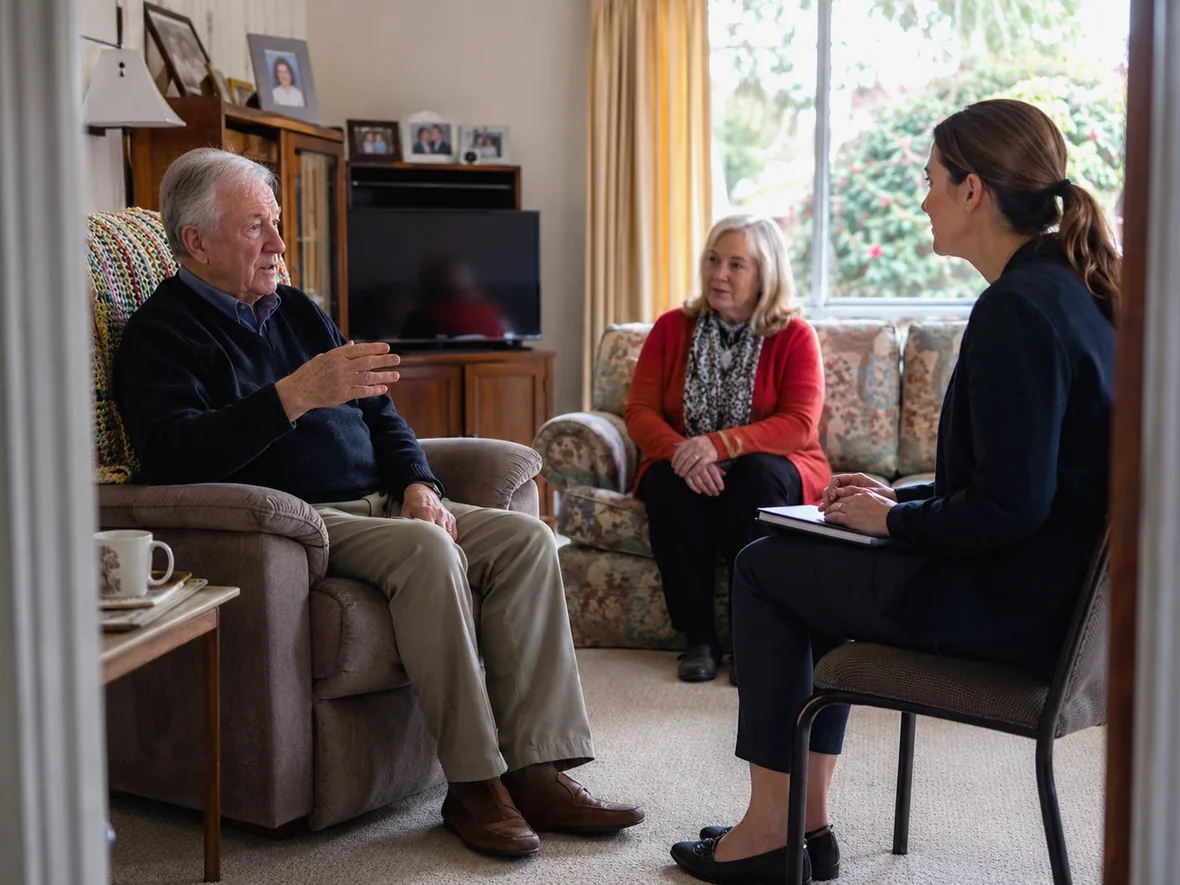
Australia now uses a single assessment system, so one assessment workforce covers both entry level support and higher level care. An assessor usually visits you at home, or sees you in hospital, and goes through:
- Daily tasks: showering, dressing, cooking, cleaning, shopping, medication
- Mobility, falls history, and how you move around the house
- Memory, mood and cognition
- Health conditions, medications and recent hospital admissions
- Your home environment, including steps, bathrooms and hazards
- Who supports you now, and how they are coping
The mistake almost every family makes
Answer for your worst week, not your best morning.
Assessors use what you tell them and what they see, and can also contact your GP, service providers and support network to help inform the assessment. Your Support at Home classification, and so your budget, is set by your aged care assessment, so it matters that the assessor hears about your real needs.
Keep a two week diary beforehand noting falls, skipped meals, missed medication and nights of poor sleep. Have a family member present who will speak up if the answers start drifting optimistic. None of this is exaggeration, it is accuracy.
Step three: the outcome letter
You receive a letter setting out what you have been approved for. That might include entry level services through the Commonwealth Home Support Program, a Support at Home classification level, respite, restorative care, or residential aged care.
Approval is not the same as a place. For Support at Home there is usually a wait while you sit in the national priority queue.
Read the letter closely. If it does not reflect your situation you can ask the Department for an internal review, free of charge, but you must ask within 28 days of receiving the letter. If your circumstances change significantly, for example after a fall or a new diagnosis, ask for a reassessment rather than waiting for the next crisis.

Step four: choose a provider
Your referral code is usually included in your support plan, and you give it to the provider you choose. You are not obliged to accept the first provider offered, and you can change providers later if it is not working.
Compare hourly rates, weekend and after hours loadings and notice periods. Under Support at Home, 10% of each quarterly budget for ongoing services is set aside for care management, and providers cannot charge separately for package management or travel, or charge an entry or exit fee. Ask for a sample monthly statement before you sign anything.
How long the whole thing takes
The application takes around 15 to 20 minutes, and an assessment organisation will then call within 2 to 6 weeks to confirm your needs. Target timeframes for completing the assessment range from 10 to 40 days depending on urgency. Hospital discharges are prioritised.
The longest part is usually the wait between approval and funding actually being released, which depends on your assessed priority. If you already receive Commonwealth Home Support Program services, you can keep them while you wait, and you can buy services privately in the meantime.
Free help getting through it
The Older Persons Advocacy Network (OPAN) provides free, independent and confidential advocates who can give you information and support with your aged care, including if you are finding it hard to get services. Call 1800 700 600.
Carer Gateway on 1800 422 737 supports the family member doing the caring, including counselling and emergency respite.
Frequently asked
How long does an aged care assessment take?
Does an aged care assessment cost anything?
Can someone else arrange the assessment for me?
What if I disagree with the outcome?
Sources
This guide is general information, written from the published sources below. It is not a substitute for advice about your own circumstances.
My Aged Care, 2026
How to get assessedOlder Persons Advocacy Network, 2026
Free aged care advocacyCarer Gateway, 2026
Support for carers