Key points
- The Commonwealth Home Support Program (CHSP) provides entry level help for older people who need some support to keep living at home, and it still exists. CHSP was not replaced by Support at Home on 1 November 2025.
- CHSP came under the Aged Care Act 2024 on 1 November 2025, which means its providers now work under the same regulatory model as other registered aged care providers, with obligations that depend on their registration categories.
- In August 2026 the Government extended CHSP for another two years, to 30 June 2029, and the Department has said it will begin consultation in 2026 on the long term design of entry level support.
- CHSP has no national fee schedule. Providers set their own client contributions under the National Client Contribution Framework, must publish a contribution policy, and contributions should not be more than the actual cost of delivering the service.
- CHSP is block funded to providers and generally requires a home support assessment through My Aged Care on 1800 200 422, while Support at Home uses an individual quarterly budget and a comprehensive assessment.
- A Support at Home participant generally cannot also use CHSP, but defined exceptions cover existing social support group activities, hoarding and squalor assistance, respite services, urgent services in an emergency and vision advisory services.
Yes, CHSP still exists
If you have read that CHSP was absorbed into Support at Home, that is not correct. CHSP is a separate program and continues to operate.
Support at Home replaced the Home Care Packages Program and the Short-Term Restorative Care Programme on 1 November 2025. CHSP was not part of that change and continues to operate.
What did change is regulation. CHSP came under the new Aged Care Act on the same date, which means its providers now work under the same regulatory model as other registered aged care providers, with obligations that depend on their registration categories. So the programme continued, but the rules around it tightened.
1 November 2025
CHSP comes under the Aged Care Act 2024. Providers now work under the same regulatory model as other registered providers. The programme itself continues.
30 June 2029
CHSP funding extended to this date, announced August 2026. Consultation on the long term design of entry level support is due to begin in 2026.
ExtendedNote the wording carefully. In August 2026 the Government extended CHSP for another two years, to 30 June 2029. That is a funding extension, not an announced end date. The Department has said it will begin consultation in 2026 on how entry level support should work after that.
What CHSP is for
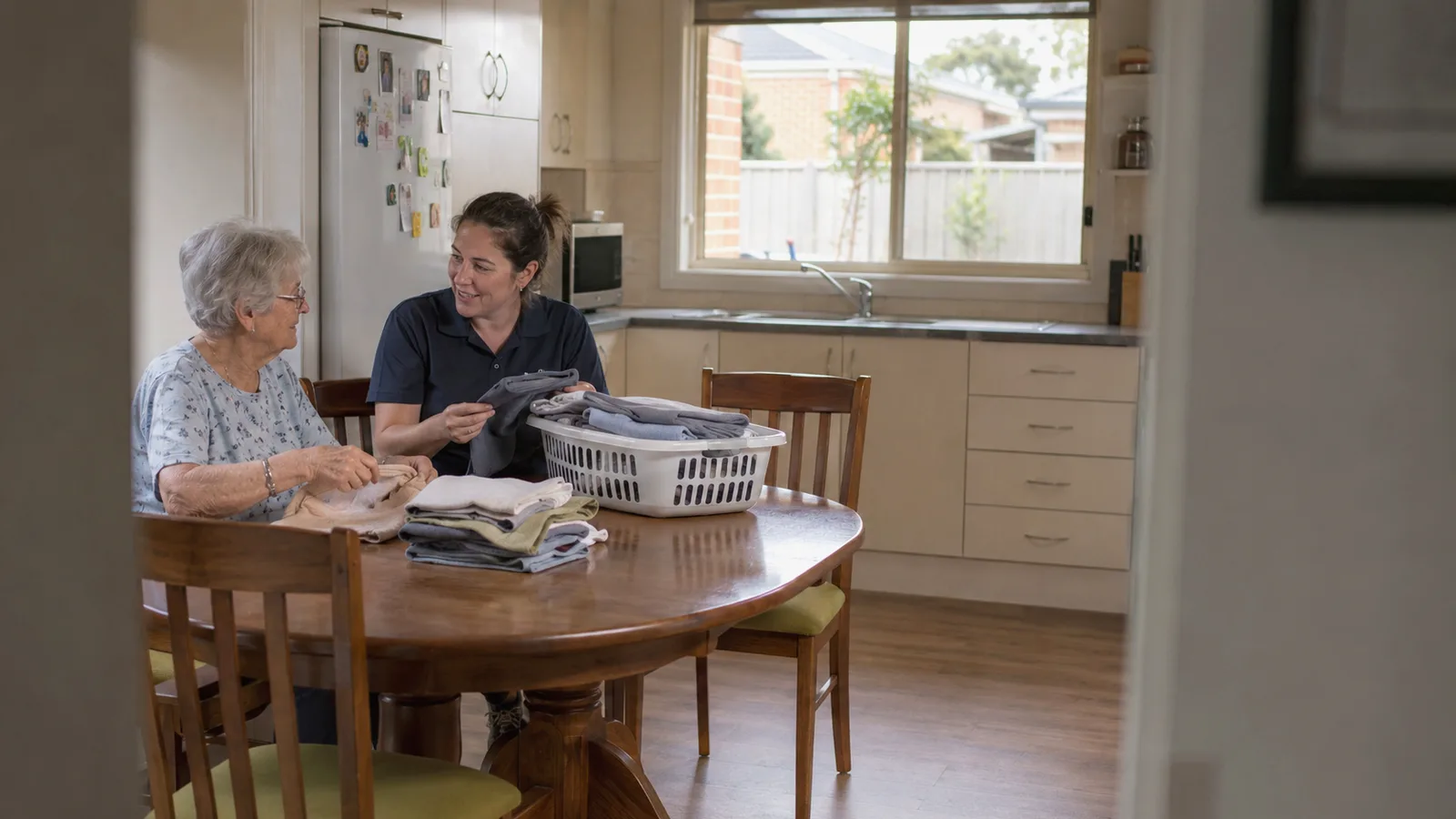
People who need a bit of help rather than ongoing structured care. Someone who is managing well but cannot get to the shops, or needs help with the heavy cleaning, or would benefit from a weekly social group.
The funding model is different from Support at Home. CHSP money goes to providers in blocks to deliver approved services, rather than being allocated to an individual as a budget they direct.
What it covers
| Service | What that means in practice |
|---|---|
| Domestic assistance | Help with cleaning, laundry and household tasks |
| Personal care | Help with personal hygiene, grooming and other daily living activities |
| Meals | Delivered meals or help preparing food |
| Transport | Getting out into the community and to your usual activities |
| Social support | Individual visits or group activities |
| Nursing and allied health | Eligible health related support at home |
| Home maintenance and modifications | Minor repairs, garden and house maintenance, and home modifications that help prevent accidents |
| Goods and equipment | Aids that support independence |
| Respite | Short term care so a carer can take a break |
CHSP or Support at Home
| CHSP | Support at Home | |
|---|---|---|
| Level of need | Entry level, occasional help | Ongoing assessed needs |
| Assessment | Home support assessment | Comprehensive assessment |
| How it is funded | Block funded to providers | Individual quarterly budget |
| What you pay | Provider sets the contribution | A percentage, by service type and means |
| Status | Continues separately | Started 1 November 2025 |
The plain version: CHSP is for people who are managing at home but need support with a few tasks. Support at Home is for people who have more complex needs, or need help with everyday tasks to live safely and independently.
What CHSP costs, and why nobody can tell you
There is no national fee schedule for CHSP. The Department publishes national client contribution ranges for each service type as a guide, but each provider sets its own amounts.
Providers set their own client contributions under the National Client Contribution Framework, which is principles based rather than a price list. They must publish a contribution policy, and their contributions should not be more than the actual cost of delivering the service.
That means two providers in the same suburb can legitimately charge different amounts for the same service. So ask each provider for its published contribution policy before you commit. It is a reasonable question and they should have it ready.
The framework also recognises hardship. Providers should take each person's capacity to pay into account, and they must have a public financial hardship policy explaining how to ask for a reduced or waived contribution. Raise it with the provider if it applies.
How to get CHSP
Start through My Aged Care on 1800 200 422. CHSP generally requires a home support assessment, which is the lighter of the two assessment types.
See how to get an aged care assessment for what happens and how long each stage takes. If needs grow beyond occasional help, the Support at Home service list shows what the next programme up can pay for.
Can you have CHSP and Support at Home together?
The general rule is no duplication. CHSP should not fund something the Support at Home budget already covers.
But the Department lists specific circumstances where a Support at Home participant can also access CHSP services:
- Social support group activities they were already attending
- Hoarding and squalor assistance
- Respite services
- Urgent services for a short time, when there is an immediate health or safety need and your Support at Home budget is fully allocated or not yet available
- Vision advisory services
If you are on Support at Home and your carer needs a break, CHSP respite may still be available without eating into your quarterly budget. It needs approval through My Aged Care, and you pay the CHSP provider's client contribution yourself.
Frequently asked
Has CHSP been replaced by Support at Home?
When does CHSP end?
How much does CHSP cost?
What is the difference between CHSP and a home care package?
Do I need an assessment for CHSP?
Can I have CHSP and Support at Home at the same time?
What is a CHSP referral code?
Sources
This guide is general information, written from the published sources below. It is not a substitute for advice about your own circumstances.
Department of Health, Disability and Ageing, 2026
Commonwealth Home Support Program (CHSP)Department of Health, Disability and Ageing, 2026
Commonwealth Home Support Program (CHSP) reformsDepartment of Health, Disability and Ageing, 2026
Charging for the Commonwealth Home Support Program (CHSP)Department of Health, Disability and Ageing, 2026
How Support at Home interacts with other aged care programs