Key points
- There is no separate dementia home care program in Australia: dementia care at home is funded through Support at Home or the Commonwealth Home Support Program after an aged care assessment.
- Support at Home classifications take cognitive ability into account, and the old dementia and cognition supplement continues only for Home Care Package recipients who had it on 31 October 2025 and have not accepted a new classification.
- Residential respite is available for up to 63 days of subsidised care a financial year, with extensions of 21 days at a time if an assessor approves.
- The National Dementia Helpline (1800 100 500) and Dementia Support Australia (1800 699 799) are both free and available 24 hours a day.
- Under the Aged Care Act 2024 and Aged Care Rules 2025, restrictive practices in aged care homes, including environmental restraint, must be a last resort, used with informed consent and a behaviour support plan.
- A memory support unit is not a regulated term or funding category: entry is through the same residential care approval and fees as the rest of the home.
What are the dementia care options in Australia?
Dementia care options in Australia run from a few hours of help at home, through respite and day programs, to full-time care in an aged care home, sometimes in a secure memory support unit. Most families use several at once, and the mix changes as the dementia progresses. Nearly all government-funded options start with an aged care assessment.
There is no fixed order. Some people stay at home until late in the illness with heavy support. Others move into residential care early because a carer is unwell or living alone is no longer safe. The table below shows the usual building blocks and how each one is reached.
| Option | What it is | How to get it |
|---|---|---|
| Support at Home | Ongoing funded help at home: personal care, nursing, respite, cleaning, meals, equipment | Aged care assessment through My Aged Care |
| CHSP | Lower-level ongoing help at home, including some respite types | Home support assessment through My Aged Care |
| Respite at home or in a day centre | A few hours or overnight care so the carer gets a break | Through Support at Home or CHSP; emergency respite through Carer Gateway |
| Residential respite | Short stays in an aged care home, up to 63 days a financial year | Aged care assessment approval for residential respite |
| Residential aged care | Permanent 24 hour care in an aged care home | Aged care assessment approval for residential care |
| Secure or memory support unit | A locked or enclosed area inside some aged care homes | Arranged with the individual home after residential approval |
| Specialist dementia care unit | Specialist unit for very severe behaviours, not intended as a permanent home | Referral assessed by Dementia Support Australia |
To start, the older person, or someone acting for them, registers with My Aged Care on 1800 200 422. Our guide to getting an aged care assessment covers what the assessor asks and what the outcome letter means.
How does dementia care at home work?
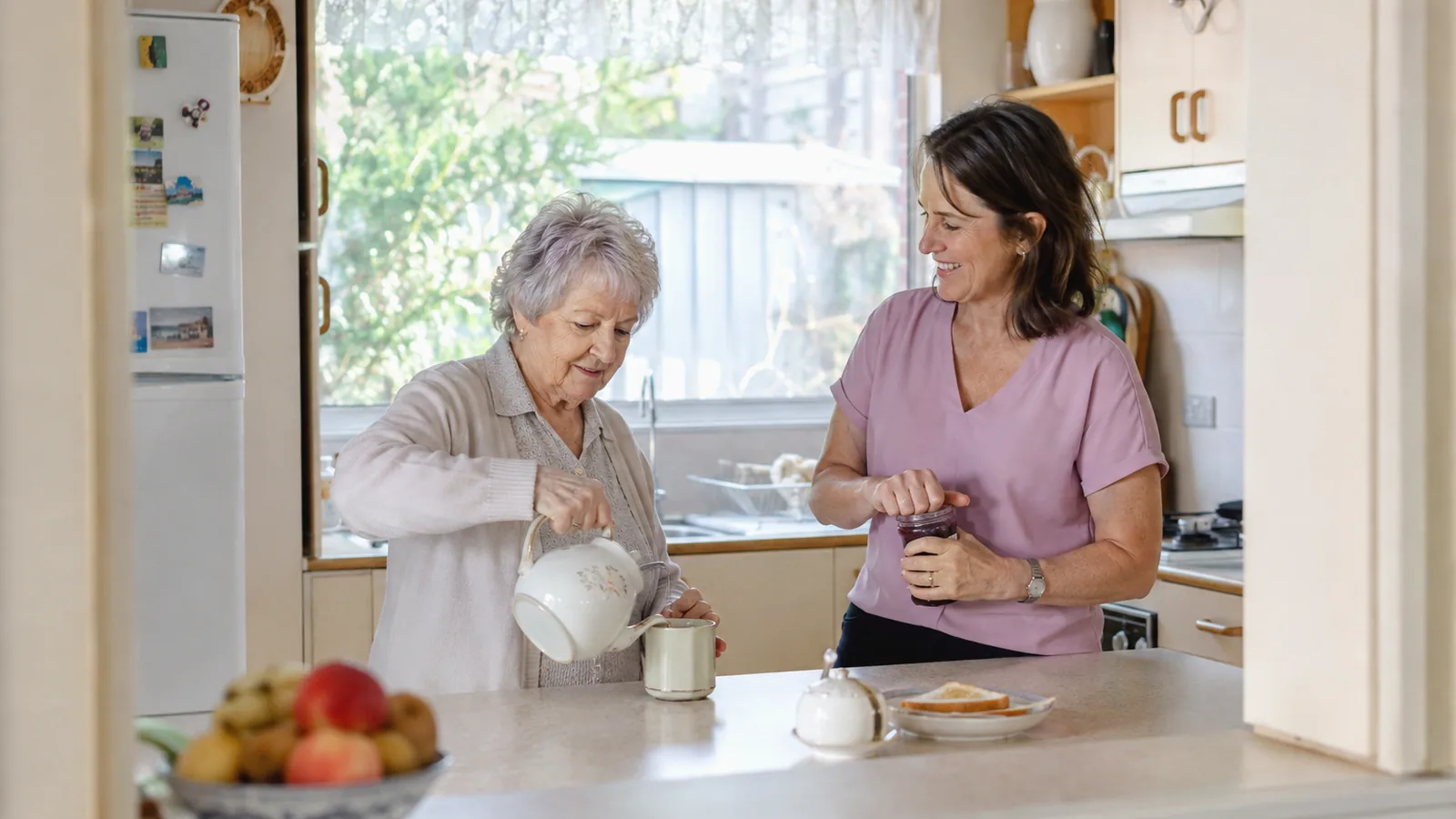
Dementia care at home is usually funded through Support at Home, or through the Commonwealth Home Support Program (CHSP) for lower needs. There is no separate dementia home care program. Instead, the assessment takes the person's cognition into account when it sets their Support at Home classification, which decides the size of their quarterly budget.
Support at Home has eight ongoing classifications. The Department says funding is recommended from the person's clinical characteristics recorded on the Integrated Assessment Tool, and that this includes consideration of their cognitive ability. From 1 July 2026 the annual amounts range from $11,010.01 at classification 1 to $80,137.12 at classification 8. From 1 October 2026 they rise to $11,031.56 and $80,294.00. Ten per cent of each quarterly budget goes to care management.
The old dementia and cognition supplement has mostly gone. People on a Home Care Package who were receiving it on 31 October 2025 keep it, but it stops if they are reassessed and accept a Support at Home classification. That trade-off is worth discussing with the provider before asking for a reassessment.
Services that tend to matter most with dementia include:
- Personal care, such as help with showering, dressing and taking medications
- Flexible respite, delivered at home during the day or overnight
- Social support and community engagement
- Nursing and allied health, such as occupational therapy
- Assistive technology and home modifications, funded separately through the AT-HM scheme
Clinical care attracts no participant contribution. Independence services, which include personal care and respite, and everyday living services, such as cleaning and meals, carry means-tested contributions. Our guide to Support at Home explains the classifications and waits, and the Support at Home service list shows what can and cannot be funded. CHSP remains open and is explained in our CHSP guide.
Respite and day centres for people with dementia
Respite gives the carer a break while someone else provides care. With dementia it comes in four main forms: care at home, group programs in a day centre, overnight stays in a cottage, and short stays in an aged care home. Emergency respite is also available through Carer Gateway on 1800 422 737 when a carer suddenly cannot continue.
My Aged Care lists five types: emergency respite, respite at home, community and centre-based respite, cottage respite and residential respite. Under Support at Home, flexible respite happens in the home, and community and centre-based respite is delivered to groups in a community setting, which is what most people mean by a day centre. Cottage respite is only available through CHSP, not Support at Home.
Residential respite is available for up to 63 days of subsidised care in a financial year. An assessor can approve extensions of 21 days at a time. It needs its own approval from an aged care assessment, so it is worth asking for it at the same assessment as home support.
Residential respite as a trial run
A short respite stay lets the family see how a home handles dementia day to day, and lets the person with dementia get used to a new place. Some families use a respite stay at a home they are considering for permanent care. Our respite care guide covers costs and booking.
Who to call for dementia support and changed behaviours
Two national services cover most dementia questions. The National Dementia Helpline, run by Dementia Australia on 1800 100 500, gives information and emotional support at any hour. Dementia Support Australia, on 1800 699 799, helps when behaviour changes such as agitation, aggression or distress are making care hard, at home or in an aged care home.
| Service | Number | What it helps with |
|---|---|---|
| National Dementia Helpline (Dementia Australia) | 1800 100 500 | Free, confidential support 24 hours a day, every day of the year. Can talk through My Aged Care, Carer Gateway and other services |
| Dementia Behaviour Management Advisory Service (DBMAS) | 1800 699 799 | Free advice for family carers and staff when behaviours change. Includes phone or in-person assessment and written recommendations |
| Severe Behaviour Response Teams (SBRT) | 1800 699 799 | Mobile experts who support staff in aged care homes with severe behaviours |
| Specialist Dementia Care Program (SDCP) | 1800 699 799 | Specialist units in aged care homes for very severe behaviours, aiming to stabilise within 12 months on average |
| Carer Gateway | 1800 422 737 | Free counselling, peer support, coaching, skills courses and emergency respite for carers |
| My Aged Care | 1800 200 422 | Assessments and government-funded aged care |
Dementia Support Australia is the national provider of DBMAS and SBRT, and it assesses referrals for the Specialist Dementia Care Program. Families can refer themselves by phone, online form or live chat. Specialist dementia care units are for people whose severe symptoms have lasted at least three months and have not improved with other specialist help. The program aims to support a move to a less intensive setting afterwards.
For interpreters, call the Translating and Interpreting Service on 131 450. Our who to call page lists the other aged care numbers in one place.
What is a memory support unit or secure dementia unit?
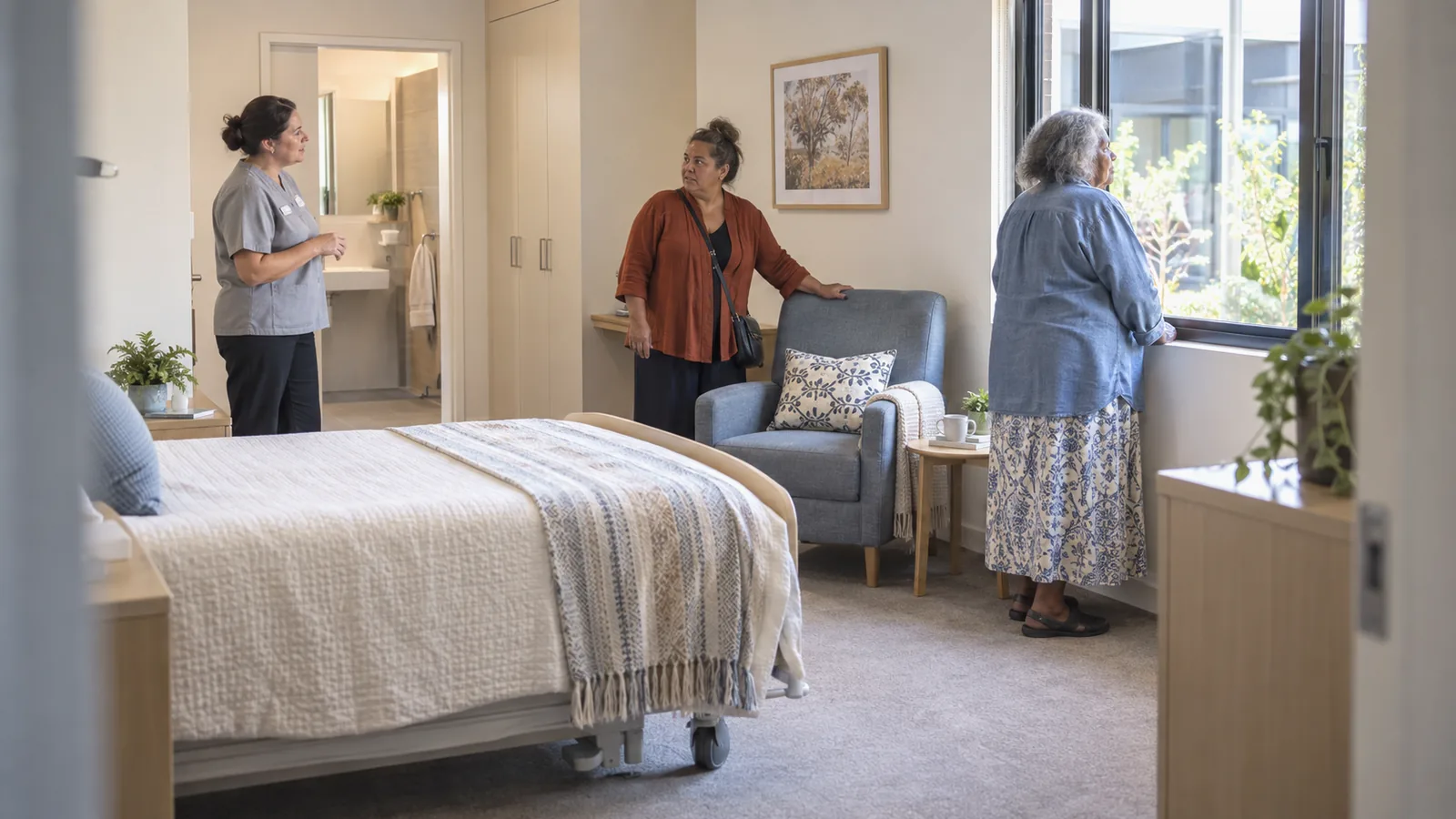
A memory support unit, also called a secure unit or dementia unit, is a locked or enclosed area inside an aged care home where residents cannot leave freely. Homes use them mainly for residents who walk out and could come to harm. The name is not a regulated term, so what a home offers behind that label varies.
There is no separate government funding category or approval called a memory support unit. Entry is through the same residential care approval as any aged care home, and the home decides who is placed in its secure area. Fees work the same way as for other residents. Our guide to what aged care costs explains the charges.
Some units are small, homelike wings with garden access and staff who know each resident. Others are simply a corridor with a keypad door. A secure unit is not automatically better dementia care. Many people with dementia live well in general areas of a home, and moving into a locked area is a significant restriction on someone's freedom.
A locked door is not a care plan. Ask what happens inside the unit.
Secure units, restraint and consent under the new Act
Under the Aged Care Act 2024, any practice that restricts a person's rights or freedom of movement is a restrictive practice. In aged care homes, restrictive practices may only be used as a last resort to prevent harm, in the least restrictive form and for the shortest time, with informed consent, and in line with a behaviour support plan.
The Aged Care Rules 2025 list five types: chemical, environmental, mechanical and physical restraint, and seclusion. Environmental restraint means restricting a person's free access to all parts of their environment, including items and activities, for the primary purpose of influencing their behaviour. Locked areas can fall within these rules, so it is fair to ask a home how its secure unit is treated under them.
For residents of aged care homes, the Rules require, among other things:
- Alternative strategies are tried first where possible and recorded in the behaviour support plan
- Informed consent from the resident, or if they lack capacity, from their restrictive practices substitute decision-maker, covering how the practice is used, how often and for how long
- For restraint other than medication, an approved health practitioner who knows the resident has assessed the risk of harm and that the practice is necessary
- The home consults the resident or their decision-maker when preparing and reviewing the behaviour support plan
- Use of the practice is monitored and the plan reviewed regularly
The substitute decision-maker is first anyone appointed for this purpose under state or territory law. If there is none and no clear way to appoint one, the Rules set out a fallback order that can include a nominee, a partner, or a relative or friend who has agreed in writing. In an emergency some requirements do not apply while the emergency lasts.
Restraint outside the rules must be reported
Using a restrictive practice other than in line with the rules is a reportable incident under the Act, as is an unexplained absence of a resident. If you have concerns, raise them with the home first, then with the Aged Care Quality and Safety Commission. Our guides to complaints and your rights and the Aged Care Act 2024 explain how.
Legal planning after a dementia diagnosis
Legal planning is easiest soon after a dementia diagnosis, while the person can still make and sign their own documents. The key documents are an enduring power of attorney for financial and legal decisions, an appointment for health and lifestyle decisions, an advance care directive, and a will. Names and rules differ between states and territories.
Dementia Australia describes the four documents this way:
- Enduring power of attorney: appoints one or more people to make financial or legal decisions
- Enduring guardian or medical treatment decision-maker: appoints one or more people to make medical and health care decisions. The title depends on the state or territory
- Advance care directive: records the person's values, preferences and directions about future health care
- Will: sets out who inherits their assets
These documents need capacity to make. Once capacity is lost, families usually have to apply to a state or territory tribunal for a guardianship or administration order, which takes longer and leaves less say to the person. Dementia Australia links to the rules for each state and territory, and a solicitor or the state public trustee or guardian can explain local forms.
It also helps to set up a registered supporter in My Aged Care, so a family member can help the older person make and communicate decisions about assessments and services. A registered supporter cannot decide for them; only someone with legal authority, such as an enduring power of attorney or guardian, can do that. My Aged Care can explain the options on 1800 200 422.
How to judge an aged care home's dementia care
The best test of a home's dementia care is what you see and what staff can tell you in detail: how they learn about each resident, how they respond to distress, how they avoid restraint, and who is on the floor at night. Star ratings and Commission reports help, but they do not measure dementia care directly.
Questions worth asking on a visit:
- How many residents live with dementia, and where in the home do they live
- If there is a secure unit, who decides who moves in or out, and how consent is recorded
- What staff do when a resident is agitated or calling out, before any medication is considered
- How behaviour support plans are written, and whether families are consulted
- Whether staff have dementia training, and how often they use Dementia Support Australia
- What activities run in the afternoon and evening, when distress is often worse
- Who is on duty overnight, and whether a registered nurse is on site
Visit more than once, including late in the day. Watch whether staff speak to residents by name, whether people are engaged or just seated, and whether the outdoor area can actually be used. Our list of questions to ask an aged care provider covers cost, staffing and complaints, and our guide to aged care star ratings explains what the ratings measure and what they miss.
Frequently asked
Is there funding for dementia care at home in Australia?
Does the dementia supplement still exist under Support at Home?
What is a memory support unit in aged care?
Who do I call when someone with dementia becomes aggressive or agitated?
Can an aged care home lock a resident with dementia in a secure unit?
How many days of residential respite can a person with dementia get?
What legal documents are needed after a dementia diagnosis?
Is the National Dementia Helpline free?
Sources
This guide is general information, written from the published sources below. It is not a substitute for advice about your own circumstances. Confirm anything you plan to act on with My Aged Care on 1800 200 422 or a qualified adviser.
Department of Health, Disability and Ageing, checked 22 September 2026
Support at Home program: Frequently asked questions for providers (PDF)Department of Health, Disability and Ageing, checked 22 September 2026
Dementia Behaviour Management Advisory Service (DBMAS)Dementia Australia, checked 22 September 2026
The National Dementia HelplineDementia Support Australia, checked 22 September 2026
Who DSA helpsMy Aged Care, checked 22 September 2026
Respite careFederal Register of Legislation, checked 22 September 2026
Aged Care Rules 2025 (Compilation No. 9, 18 July 2026)Federal Register of Legislation, checked 22 September 2026
Aged Care Act 2024